



This is a topic which is often raised because marking one’s territory may be one of the most ancient of male imperatives. Since branding is widely demonstrated in the Gor novels, the only question is whether or not an actual heat-brand is the best way to go, or is it better to use a tattoo. There are pros and cons for either choice.
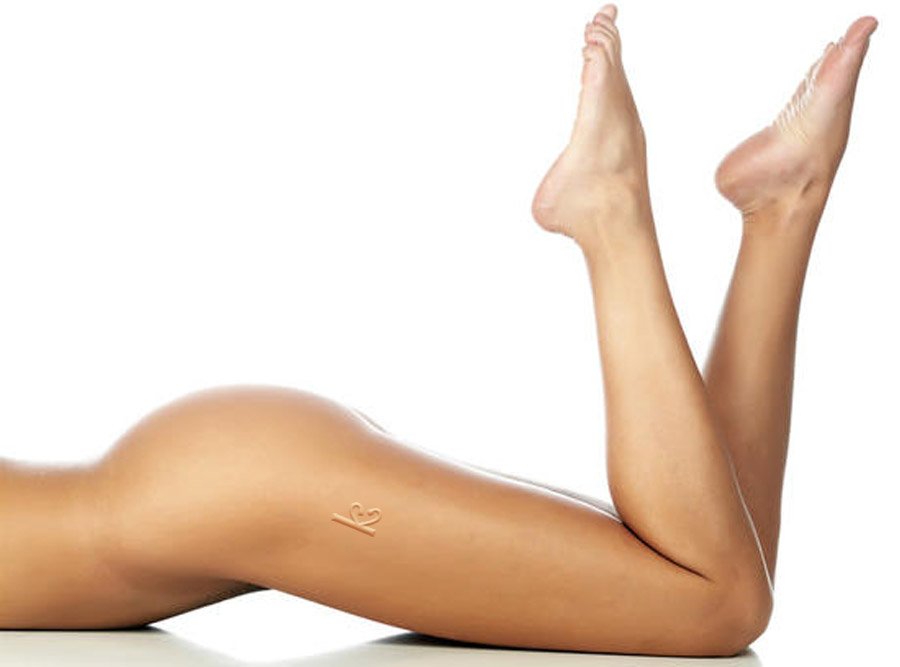
The Kef in a perfect brand
A brand is more psychologically impactual than a tattoo, and this is one of the reasons for it’s use in the Gor novels. The woman knows that once in place, she is incontrovertibly the property of men and for the rest of her life, will be recognized as such by any man who knows the meaning of the brand. If done correctly, a branding can produce a perfectly raised image, without blurring or distortion, and one which blends back into the surrounding flesh. More subtle than a tattoo, yet it can be unmistakably felt and traced by a stroking hand in the dark.
There are some who advocate branding using a soldering iron or wood-burning tool, to better inscribe the image. This produces a very different sort of brand, one which is typically indented rather than having the embossing effect, and is more likely to produce a darker image due to the burnt skin.
The problem with branding is that not many people have much experience with branding human flesh, so the odds on the brand coming out correctly are not good. A human branding gets exactly one chance to get it right, trying to go back over the same brand spot is seldom going to be aligned perfectly and the previously damaged skin is not going to respond the same as it did the first time. If held for too short a time it can easily heal over or not raise, and if held for too long a time it can cause excessive damage to the skin, veins, or nerves beneath. It could smear, or if improperly placed, actually cause nerve damage and even bone damage. Human skin does not respond to branding in the same fashion that pig skin or cattle skin will, and extra care has to be taken with human skin to avoid infection, smearing of the image, and perhaps the most alarming possibility; that the brand will ‘heal over’ and no longer be visible, necessitating a second attempt at this very painful experience.
There are very few things in the Gor novels which may not work in reality, the way John Norman describes them in the books; branding is one of them. A possible justification may lay in the effects of the currently fictional ‘longevity serums’, which alter human cellular and DNA structure in subtle ways to increase lifespan to more than a thousand years (refer: Torvald), and perhaps this also explains how human flesh reacts to a branding in Norman’s fictional setting.
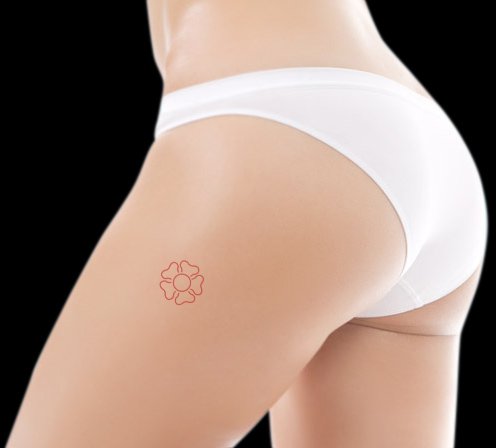
The Dina brand as a tattoo
Alternatively, one may choose to go with a tattoo rather than a brand. On the one hand, it may not equal the heat-branding in terms of providing a mental/emotional jolt to force the way to understand and accept her new status. On the other hand, it provides a myriad of possibilities in terms of design and color options. It’s nearly as permanent as a heat-brand (while it can be covered, actual removal without any trace is questionable at best) and still offers significant psychological impact and reminder to the girl.
A down-side to the tattoo is that once it’s healed, it’s not going to leave a perfectly smooth, embossed symbol that can be felt and known even the dark. Whether or not this is important, is up to the owner to determine.
A tattoo is easily made very personal by adding the owner’s personal mark or emblem to it, offering the possibility of a very unique beautiful mark on the girl’s flesh. Another possibility is the ability to ‘grow’ the mark, by starting out with a very simple brand and over time, as the kajira achieves new plateaus of experience, ability, and knowledge, adding additional embellishments which are rich with meaning and value.
Ultimately, the girl’s owner will decide whether branding or tattooing is more feasible and appropriate for his property. Hopefully, he will do so, after taking the time to know the pros and cons of the options before him.
The thighs and the lower left abdomen are the brand sites recommended by Merchant Law. Masters, of course, may brand a girl wherever they please. She is theirs. Sometimes brands are placed on the left side of the neck, on the left calf, the interior of the left heel, and on the inside of the left forearm. The customary brand site, incidentally, is high on the left thigh. That is the site almost invariably utilized in marking Gorean kajirae.
– John Norman, Fighting Slave of Gor, Page 349