



| Dr. Lange’s Non-Fiction |
Many are unaware that Dr. Lange also both edited and wrote a number of non-fiction books on philosophy, and one book about exploring the range of human sexuality. Browse below to take a look for yourself.
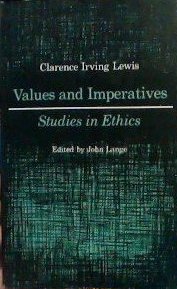 |
Values and Imperatives: Studies in Ethics | ||
| As John Lange, editor; Written by C.I. Lewis | |||
| 1st Published 1969 | ISBN – 0-8047-0687-5 |  |
|
| The late Clarence Irving Lewis (1883-1964) was one of America’s most distinguished philosophers. His early reputation was based largely on his contributions to logic and epistemology, but in his later years he became increasingly concerned with questions of ethics. This volume, consisting largely of previously unpublished papers and lectures, contributes substantially to our understanding of his ethical views as they were refined and clarified. | |||
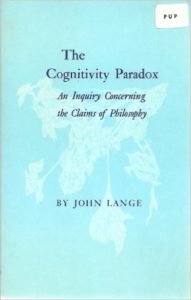 |
The Cognitivity Paradox | ||
| An Inquiry Concerning the Claims of Philosophy | |||
| 1st Published 1970 | ISBN – 0-691-07159-4 | |
|
| While quick to question the claims to knowledge that others make, philosophers have not so readily submitted their own affirmations to the same scrutiny. In fact, it seems to be the common conviction of philosophers that the assertions they make are cognitive, are true or false, and that philosophical disagreement is genuine disagreement. In this stimulating essay Professor Lange confronts this assumption, presents his own view of philosophy as proposal, and then seeks a solution to the paradox that his view poses for philosophy. | |||
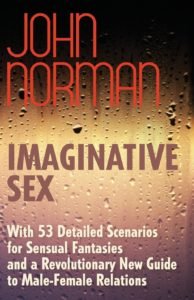 |
Imaginative Sex | ||
| An Inquiry Concerning the Claims of Philosophy | |||
| 1st Published 1974 | ISBN – 0-7592-1728-9 | |
|
| Imaginative Sex outlines John Norman’s philosophy on relations between the sexes. In the first nine chapters, from “Imaginative Sex: The New Sexual Revolution,” through “Love, Hunters and Evolution,” “Marriage, Sex and Normality,” “Sex and the Brain,” “Marriage and the Ventilation of Emotions,” “Privacy,” “Disease,” “Requirements for Imaginative Sex,” to “Imaginative Techniques,” Norman details and develops his theories and ideas about sex in the modern age. In the tenth chapter, “Sensuous Fantasies: Recipes for Pleasure,” he presents fifty‑three scenarios designed to reintroduce fantasy and intimacy to the bedroom. Examples include: the Aphrodisiac Fantasy, the Rites‑of‑Submission Fantasy, the Lady Fantasy, the I‑Am‑His‑Slave‑Girl Fantasy, the Safari Fantasy, and the Blindfolded‑Lovers Fantasy, as well as many other sensuous suggestions, detailed for the enjoyment of all truly adult readers. Find out the ways in which role-playing can spice up any love life. The book ends with an epilogue and a set of appendices that cover these important topics: Garments, Ties, Apparel in Fantasy, Notes on How to Buy a Slave Girl, and Notes on Investments, Documents, and Conception. |
|||
 |
The Philosophy of Historiography | ||
| 1st Published 2010 | ISBN – 1-61756-130-4 | |
|
| This book is intended for the highly intelligent reader, who is interested in considering the difficulties, problems, and challenges of understanding and writing about the human past. It is popularly enough written, hopefully, to be a joy to read, and scholarly enough to be seriously instructive. The book has two major purposes, first, to give a reader an extensive, detailed overview of the field as it currently exists, and, second, to considerably enlarge the field itself, as it is the first book in the area to consider not only the epistemology of the field, but, in detail, its logic and semantics, its metaphysics, its axiology and its aesthetics. | |||
 |
Philosophy and the Challenge of the Future | ||
| 1st Published 2012 | ISBN – 1-61756-733-7 | |
|
| The sciences, as opposed to politics and religion, have their roots in philosophy. Philosophy has been spoken of as the mother of the sciences, although she is, in many cases, more of a grandmother or great grandmother. Scientists were originally regarded as “natural philosophers,” namely, philosophers interested in nature. There has often been an intimate relationship between science and philosophy, exceeding the facts of intellectual genealogy. The mansions of philosophy are best built, after all, on the foundations of fact, and she is deeply indebted to her “natural philosophers,” whom, in my view, she is entitled to claim and see as her own. What wondrous contributions to a human world view, or world vision, are owed to Copernicus and Kepler, Galileo, Newton, and Einstein, Darwin, and Freud, and thousands of others. Philosophy divorced from nature is malnourished, if not starved, if not barren. The telescope and microscope contributed more to philosophy than Hegel and Aquinas. A tension is generated, in eras of cognitive advance, between a status-quo, but revisable, “common sense” and new realities, new discoveries. One of the places where philosophy spends her time is the border territory between a new science and an old common sense. What sense can we make of new truths, new possibilities, in, say, reprogenetics, cloning, genetic engineering, artificial intelligence, artificial life, and such? How shall we think about them? Should they alter our view of the world, not merely additively, as in learning a new telephone number, but radically, as in taking seriously the hypothesis that wind is a meteorological phenomenon and not the breath of a god, that the earth moves, that man might be transformed and find himself become an alien onto himself. How shall we choose him to be? Philosophy has new things to do, and new places to go. It is time she started. | |||